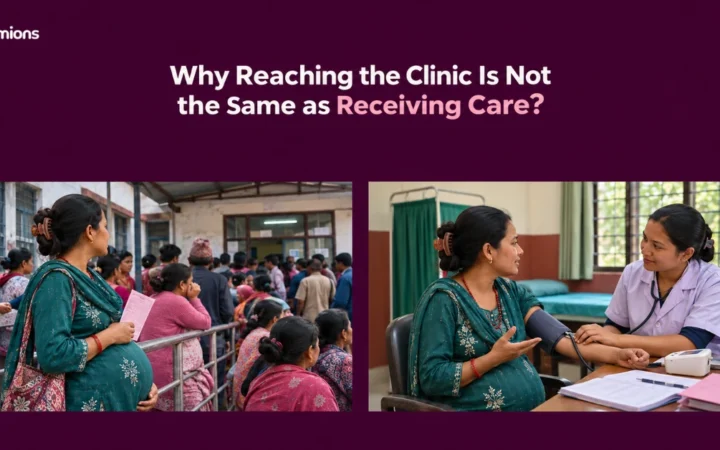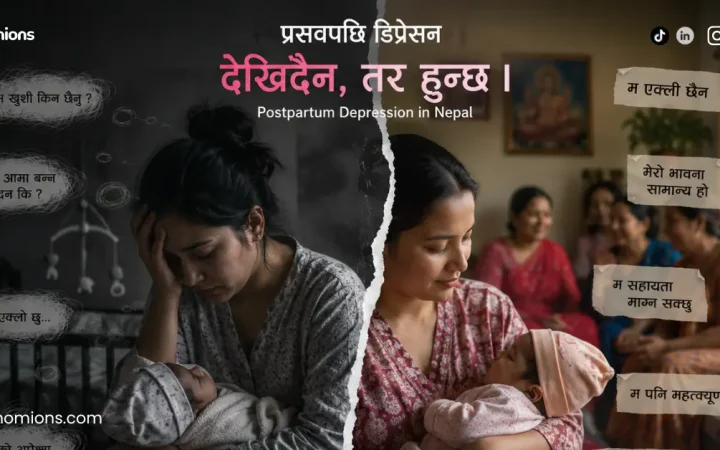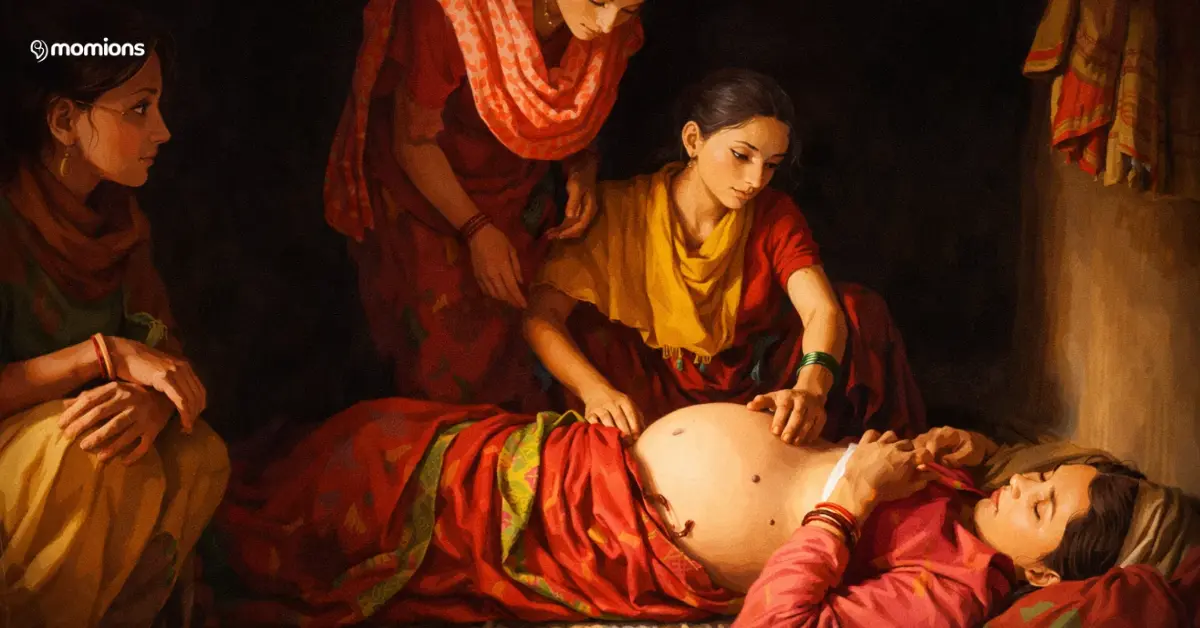
Nepal has become good at bringing pregnant women into clinics. The weak point is what happens in the days after they give birth and go home.
A success story with a gap in the middle
Measured by antenatal care, Nepal is doing well. Roughly four in five women with a recent birth (80.6%) now attend at least four antenatal care (ANC) visits, and a similar share (79.4%) give birth in a health facility, according to the Nepal Demographic and Health Survey 2022 and a 2025 PLOS ONE analysis of its data. A decade ago, both numbers were far lower.
The picture changes once the baby arrives. Only about half of mothers (51.0%) go through all three routine stages of care: four or more ANC visits, a facility birth, and a postnatal check within two days, the same analysis found. National survey figures also show that only 70.2% of mothers receive a health check in the first two days after giving birth, leaving around 30% with none.
In other words, the health system follows women closely for nine months and then largely loses sight of them at the moment their risk is highest.
Why the first two days matter most?
The World Health Organization (WHO) advises that healthy women and newborns remain in the facility for at least 24 hours after birth, and that every mother and baby receive a minimum of four postnatal contacts. Beyond the first-day check, WHO guidance places those contacts on day 3 (48 to 72 hours), between days 7 and 14, and at six weeks.
The timing reflects when mothers die. The most dangerous complications of childbirth, such as heavy bleeding (postpartum haemorrhage), infection, and high blood pressure disorders like pre-eclampsia, tend to appear in the hours and days right after delivery, not weeks later, as WHO’s postnatal care guidelines note. Nepal’s 2021 national maternal mortality study, as reported by Pandey and colleagues, found that about two in three maternal deaths happened in the postpartum period.
A mother sent home early, or one who returns to her village with no follow-up arranged, drops out of view. If bleeding starts on day two or a fever develops on day three, there may be no health worker nearby to notice.
Nepal has cut maternal deaths sharply. The maternal mortality ratio fell from 539 per 100,000 live births in 1996 to an estimated 142 in 2023, according to the latest UN inter-agency estimates. That is still about double the global Sustainable Development Goal target of fewer than 70 deaths per 100,000 live births by 2030. A large share of the remaining deaths sits in exactly the window where postnatal checks are missing.
Where the system lets women slip away
Mothers are not refusing care. The research points to gaps in how the system is built, concentrated among particular groups of women.
Discharge comes too soon. In a study of 350 mothers who delivered at public facilities in Dhading district, 61.7% left within 24 hours of giving birth. Among mothers without complications, about a third (32%) had their last check-up three hours or less before going home.
Wealth shapes the pathway. Analysis of NDHS 2022 data shows that women in the richest fifth of households are close to three times as likely to complete all three stages of care as women in the poorest fifth (adjusted odds ratio 2.98).
Women with more children fall away. Mothers on their third or later birth have half the odds of completing the continuum compared with first-time mothers (adjusted odds ratio 0.50), the same study found. One plausible explanation, though not tested in the study, is that both families and health workers treat experienced mothers as lower priority for follow-up.
Province matters. Madhesh has the lowest completion rate of any province, at 36.0%, against 60.1% in Gandaki, according to Pandey and colleagues. Women in Madhesh also have lower odds of a postnatal check within two days than women in Koshi (adjusted odds ratio 0.57).
Walking the path: where does it break?
Picture a pregnant woman in Nepal trying to receive every step of care recommended by the WHO and tracked in national survey analyses. Her checklist looks like this:
- First antenatal visit, including clear advice on giving birth in a facility and returning for postnatal checks.
- At least four antenatal visits over the course of the pregnancy.
- A facility birth with a skilled birth attendant.
- A stay of 24 hours or more after delivery so staff can watch for complications.
- A postnatal check within two days, for both mother and newborn.
- Follow-up contacts on day 3, between days 7 and 14, and at six weeks.
Most women get through the first three steps. Step four is where the path starts to crumble, as the Dhading discharge data shows, and by step five, roughly half of mothers have fallen off it.
The pattern is clear. Pregnancy care works; the handover from the labour ward back to the home does not have the structure needed to keep the most vulnerable women in view.
Closing the gap
None of the fixes needs new technology. What they need is consistent follow-through, and the research suggests three places to start.
Use the first antenatal visit well. Pandey and colleagues suggest that counselling at the first ANC contact, covering follow-up visits and facility birth, could help keep women in care, and note that this is already part of government policy. The task is making sure it actually happens at every first visit.
Equip community health volunteers to follow up. Female Community Health Volunteers (FCHVs) already anchor health outreach in rural Nepal. The same study recommends supporting them to keep up-to-date lists of pregnant women with contact details, and using mobile phone reminders for appointments. Together, these could catch mothers in the gap between delivery and the first postnatal check.
Make discharge depend on a proper check. Keeping mothers longer only helps if they are actually assessed. Khatri and colleagues recommend that a postnatal check be required before any mother leaves the facility, and the Dhading findings show why: many mothers are examined hours before they go home, not at the point of discharge.
A different way to read the numbers
A 51% completion rate and a 30% gap in early postnatal checks say little about Nepali mothers’ willingness to seek care. They say a great deal about a delivery model that breaks apart after birth.
These women have already done their part. They travel to clinics, attend repeated check-ups, and give birth in facilities. They are not a hard-to-reach population; they are already inside the health system.
The next step is for the system to keep hold of them once the baby is born.
This article is part of the Momions Maternal Health Research Series. Figures and recommendations come from the sources listed below.
References
- Ministry of Health and Population [Nepal], New ERA, ICF. Nepal Demographic and Health Survey 2022: Key Indicators Report. Kathmandu: Ministry of Health and Population; 2022. dhsprogram.com/pubs/pdf/PR142/PR142.pdf
- Pandey AR, Adhikari B, Sangroula RK, Sapkota PM, Regmi S, Sharma S, et al. Continuum of care for maternal and newborn health services in Nepal: an analysis from demographic and health survey 2022. PLoS One. 2025;20(3):e0319033. doi:10.1371/journal.pone.0319033
- World Health Organization. WHO recommendations on maternal and newborn care for a positive postnatal experience. Geneva: WHO; 2022. WHO news release, 30 March 2022
- World Health Organization. WHO Recommendations on Postnatal Care of the Mother and Newborn. Geneva: WHO; 2013. ncbi.nlm.nih.gov/books/NBK190090
- WHO, UNICEF, UNFPA, World Bank Group, UNDESA/Population Division. Trends in maternal mortality estimates 2000 to 2023. Geneva: WHO; 2025. Summarised for Nepal in: WHO Nepal, 7 April 2025
- Banstola A. The current state of maternal health in Nepal. Maternal Health Task Force, Harvard T.H. Chan School of Public Health. hsph.harvard.edu (citing the 1996 Nepal Family Health Survey)
- Ikeda S, Shibanuma A, Silwal R, Jimba M. Factors associated with the length of stay at health facilities after childbirth among mothers and newborns in Dhading, Nepal: a cross-sectional study. BMJ Open. 2021;11(5):e042058. doi:10.1136/bmjopen-2020-042058
- Khatri RB, Dhital R, Tuladhar S, Joshi Bhatta N, Assefa Y. Unpacking equity trends and gaps in Nepal’s progress on maternal health service utilization: insights from the most recent Demographic and Health Surveys (2011, 2016 and 2022). PLoS One. 2025;20(11):e0337434. doi:10.1371/journal.pone.0337434
- Poudel A. Thousands of women skip routine maternity services. The Kathmandu Post. 22 February 2023. kathmandupost.com (reporting NDHS 2022: 70.2% of women had a postnatal check within two days)