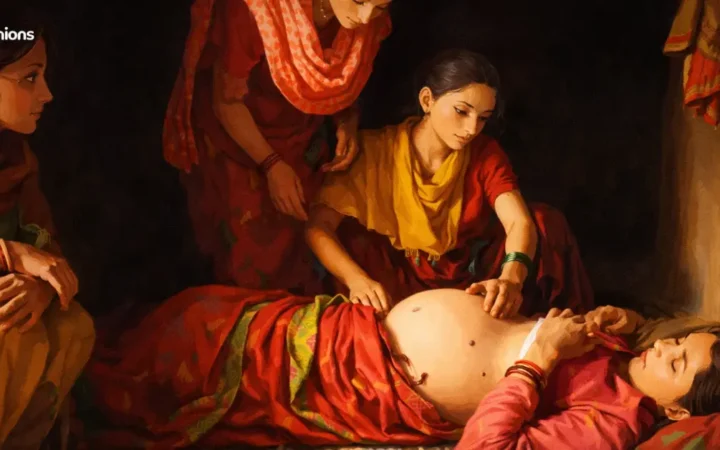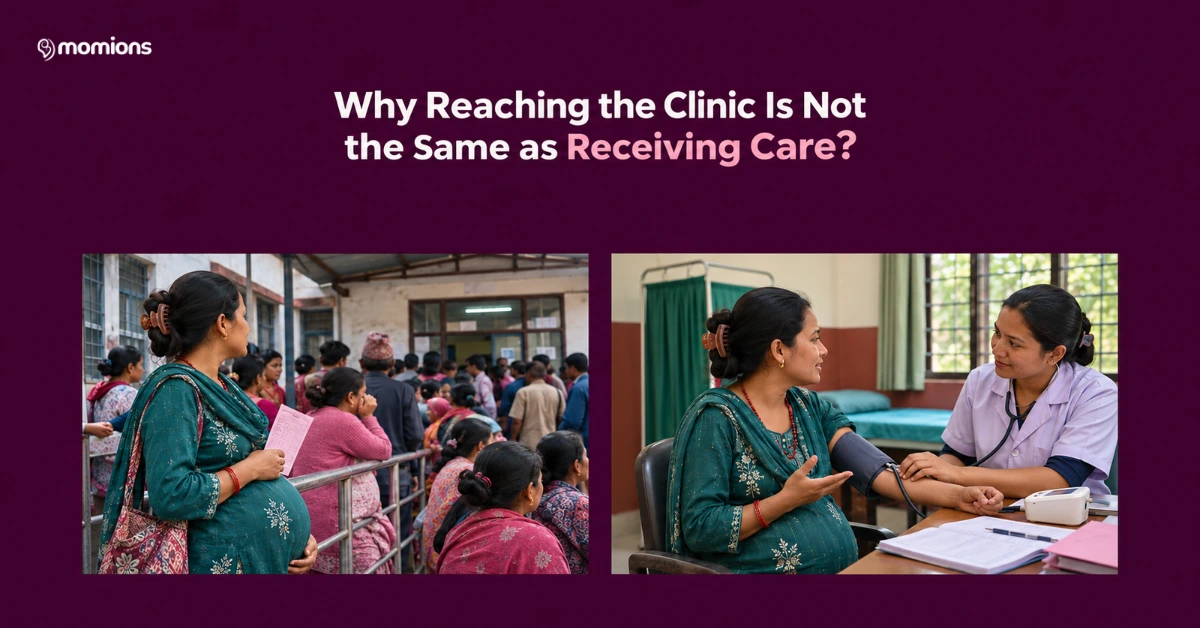
Nepal has brought mothers into its clinics. The harder question is what they receive once they are there.
For two decades, Nepal’s maternal health story has been measured in arrivals. How many women made four antenatal visits? How many gave birth in a facility? On those counts the country has moved fast: about 81% of mothers now attend four or more antenatal visits and 79% deliver in a health facility, according to a 2025 analysis of NDHS 2022 data.
But a visit is a contact, not a guarantee. A woman can sit in a clinic and leave without her blood pressure checked. She can give birth in a facility that has no trained provider on shift or is missing the drugs that stop heavy bleeding. The numbers that count arrivals cannot see any of that.
Key takeaways
- 57% of maternal deaths in Nepal happen inside health facilities, and a further 17% on the way to one.
- Only 43.7% of facilities offering delivery services met the readiness standard for normal births in 2021, and just 2.5% could perform all seven basic emergency obstetric functions.
- Among mothers who got a postnatal check in the first two days, only 1 in 5 received all three essential assessments.
- In a study of nearly 63,000 hospital births, 84% of women said they had no chance to discuss their concerns with staff.
- Closing the gap means measuring what happens during a visit, not just whether it took place.
The Quality of Maternal Care in Nepal: Four Visits, But What Happened in Them?
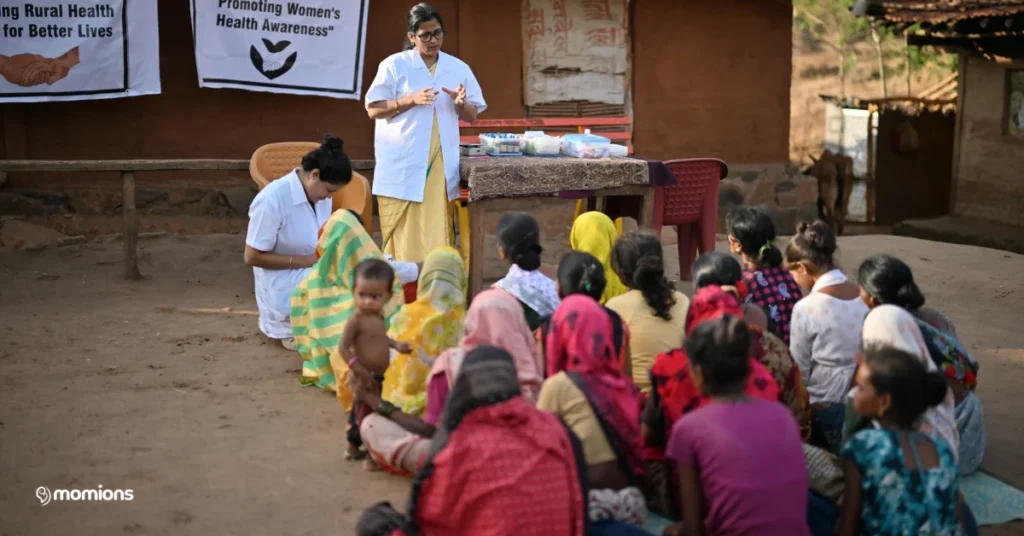
An antenatal visit is meant to do specific work: measure blood pressure to catch pre-eclampsia early, test blood for anaemia, test urine for protein and infection, provide iron supplements, and explain the danger signs that mean a woman should seek help fast.
When researchers scored these components together, the gap became clear. Using NDHS 2016 data, one study found that 70% of women had at least four visits, yet only about 21% received antenatal care that met a good-quality threshold across twelve recommended components (Adhikari et al., 2020). Only around 40% took iron tablets for the full recommended 180 days.
The clinics themselves often lack the basics. The 2021 Nepal Health Facility Survey, analysed by Rai and colleagues, gave facilities an average antenatal care readiness score of just 54.1%, barely up from 49.5% in 2015. Diagnostics was the weakest area, and only about one in ten facilities had antenatal care guidelines on hand.
A woman can tick the “four visits” box at a facility like this and still miss the tests that would have flagged her risk.
A facility birth is not automatically a safe birth
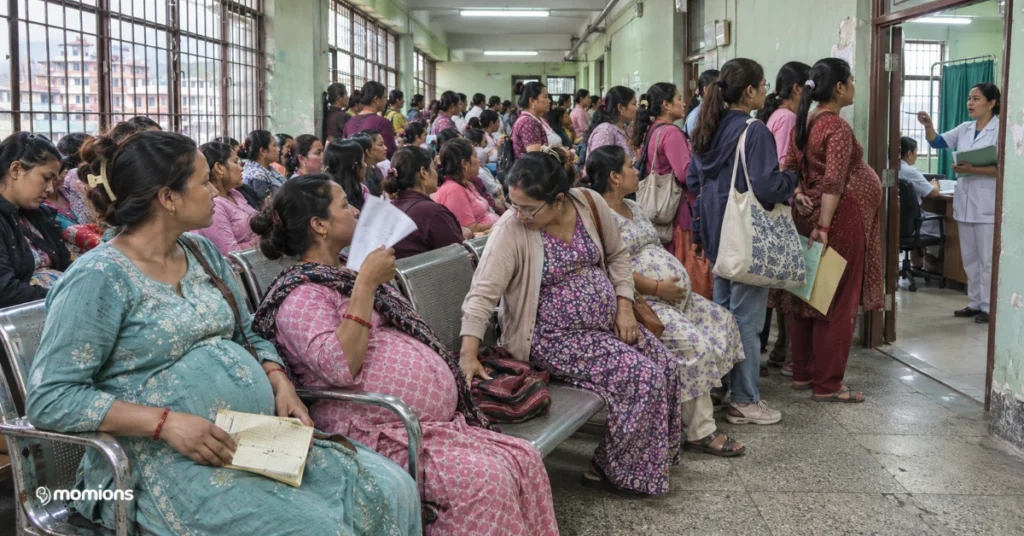
The most striking figure in Nepal’s maternal health data is where women die. According to the Nepal Maternal Mortality Study 2021, 57% of maternal deaths happened in health facilities, and another 17% happened on the way to one (Kathmandu Post; Europasian Journal of Medical Sciences).
Among women who died during or after delivery, about three in four had given birth in a health facility. More than four in five had sought treatment somewhere before they died (NMMS 2021 summary).
These women did not stay away from the health system. Many died inside it.
Part of the explanation is readiness. A 2024 study by Tuladhar and colleagues, drawing on national facility surveys, found:
- Facilities offering delivery services scored only 43.7% on readiness for normal, low-risk births in 2021, up from 37.9% in 2015.
- Just 2.5% could perform all seven basic emergency obstetric and newborn care functions, the core interventions for complications such as haemorrhage and eclampsia.
- Only 49.8% stocked all five essential maternal medicines, and nearly one in three had no provider trained in delivery care.
- Facilities with delivery care guidelines fell from 21.8% to 12.8%.
The authors describe these results as a reflection of poor quality of care. When a woman travels to give birth and the facility cannot manage an emergency, the trip itself becomes a risk: she may need to be referred onward, losing hours she does not have.
A postnatal check that checks too little
The days after birth are when most maternal deaths occur. The national study found that 61% of maternal deaths happened in the postpartum period, with obstetric haemorrhage and high blood pressure disorders among the leading causes (NMMS 2021 summary).
Yet even when a postnatal check happens, it is often incomplete. Citing NDHS 2022, Aryal (2024) reports that 28% of women had no postnatal check in the first two days. Of those who did, only 20% received all three essential assessments.
The newborn side looks similar. In a large study across 11 public hospitals, Gurung and colleagues (2022) found that about 74% of mothers were not counselled on newborn danger signs, and 60% of babies were not examined before discharge.
Timing adds to the problem. In Dhading district, about a third of mothers without complications had their last check-up three hours or less before they left the facility (Ikeda et al., 2021). A mother can be marked as “checked” and still go home with a problem no one looked for.
Being seen, not just processed
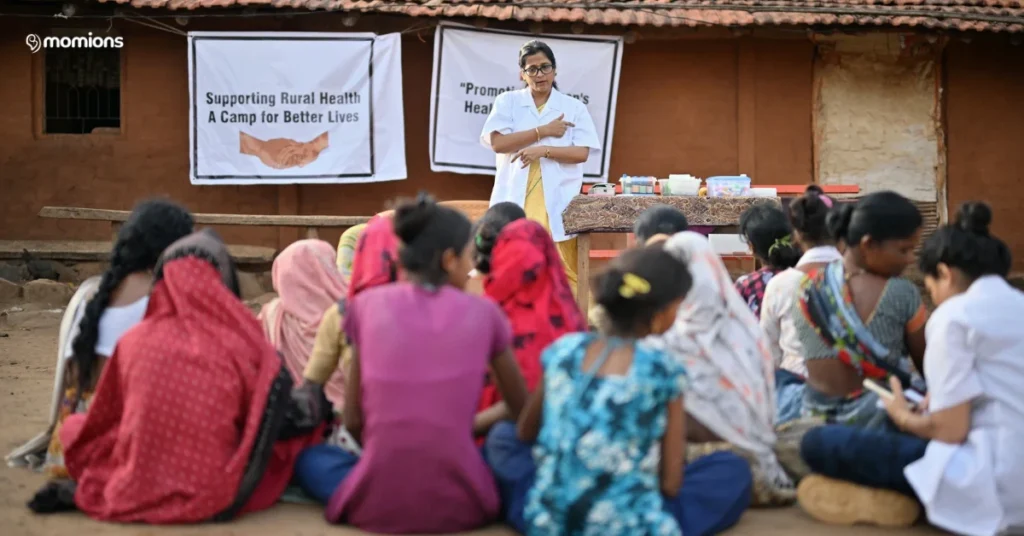
Quality is also about how women are treated. The same 11-hospital study of nearly 63,000 births asked women about their experience of care (Gurung et al., 2022):
- 84% said they had no opportunity to discuss their concerns with staff.
- 80% said they were not adequately informed about the care they received.
- Fewer than 1% reported physical, verbal or sexual abuse, though the authors caution that interviews inside the hospital may have led to underreporting.
The risk was not shared equally. Women aged 18 or younger, and Dalit, Janajati and Muslim women, were more likely to experience mistreatment than other groups.
This matters beyond comfort. A mother who was never told what to watch for cannot recognise a warning sign at home. A mother who felt ignored is less likely to return for the next visit, or to bring her next pregnancy to the same facility.
Turning contact into care
The research behind this article points to practical steps that go beyond simply counting visits.
Measure what happens during a visit. Counting four antenatal visits or one facility birth tells us about access. Tracking whether blood pressure was taken, whether tests were done and whether danger signs were explained tells us about care. Composite quality scores, like the one Adhikari and colleagues used, show how far apart the two can be.
Stock the essentials and staff every shift. Tuladhar and colleagues call for stronger supply chains for essential medicines, more trained providers, and better quality monitoring, along with greater capacity in local governments that now run basic health services. Pandey and colleagues add regular reviews of maternal and newborn deaths at health facilities.
Put guidelines and diagnostics back on site. With antenatal and delivery guidelines available in only a small share of facilities, Rai and colleagues recommend investment in staff training, quality assurance and diagnostic capacity, and closing the gaps between provinces and between public and private providers.
Make every check complete, especially at discharge. A postnatal assessment close to the moment a mother leaves, covering the full set of checks for both mother and baby, would close the timing gap seen in Dhading.
Build respect into the standard of care. Giving women time to ask questions and explaining what is being done costs little. Gurung and colleagues argue that improving health workers’ readiness and response is key to respectful care, with particular attention to the young and marginalised women most at risk.
Frequently asked questions
What is the difference between coverage and quality of care? Coverage counts whether a woman received a service, such as four antenatal visits or a facility birth. Quality asks whether that service included the right checks, treatment, information and respect.
Where do most maternal deaths in Nepal happen? The Nepal Maternal Mortality Study 2021 found that 57% happened in health facilities and 17% on the way to one.
What is facility readiness? It measures whether a facility has what it needs to provide a service: trained staff, guidelines, equipment, diagnostics and essential medicines. In 2021, facilities offering delivery services in Nepal scored 43.7% on readiness for normal births.
What is respectful maternity care? Care that protects a woman’s dignity, privacy and right to information and choice. It includes explaining procedures, listening to concerns and avoiding any form of mistreatment.
Arrival is the start, not the finish
Nepal deserves credit for bringing mothers into the health system. That was the hard first step, and millions of women have taken it.
The next step is harder to see in a survey table. It means every visit includes the tests it should, every delivery room can handle an emergency, and every mother leaves knowing what to watch for. Until then, reaching the clinic will remain a promise of care rather than the care itself.
This article is part of the Momions Maternal Health Research Series.
Sources
- Pandey AR, Adhikari B, Sangroula RK, et al. Continuum of care for maternal and newborn health services in Nepal: an analysis from demographic and health survey 2022. PLoS One. 2025;20(3):e0319033. doi:10.1371/journal.pone.0319033
- Adhikari M, Chalise B, Bista B, Pandey AR, Upadhyaya DP, et al. Sociodemographic correlates of antenatal care visits in Nepal: results from Nepal Demographic and Health Survey 2016. BMC Pregnancy Childbirth. 2020;20:513. doi:10.1186/s12884-020-03218-x
- Ministry of Health and Population [Nepal], New ERA, ICF. 2021 Nepal Health Facility Survey: Key Findings. Kathmandu; 2022. Link
- Rai P, Ackerman IN, O’Connor DA, Gorelik A, Buchbinder R. Health facility availability and readiness for family planning and maternity and neonatal care services in Nepal: analysis of cross-sectional survey data. PLoS One. 2023;18(8):e0289443. doi:10.1371/journal.pone.0289443
- Ministry of Health and Population, National Statistics Office. National Population and Housing Census 2021: Nepal Maternal Mortality Study 2021. Kathmandu; 2022. Link
- Hundreds of Nepali women dying from preventable causes every year. The Kathmandu Post. 27 March 2023. Link
- Importance of expanding midwifery-led units and midwifery care in reducing maternal deaths in Nepal. Europasian Journal of Medical Sciences. Link
- Public Health Update. National Population and Housing Census 2021: a report on maternal mortality (summary). Link
- Tuladhar S, Paudel D, Rehfuess E, Siebeck M, Oberhauser C, et al. Changes in health facility readiness for obstetric and neonatal care services in Nepal: an analysis of cross-sectional health facility survey data in 2015 and 2021. BMC Pregnancy Childbirth. 2024;24:79. doi:10.1186/s12884-023-06138-8
- Aryal Y. Trend and determinants of early postnatal care in Nepal with a focus on women’s autonomy. Kutumbha Vani. 2024;5(1). Link
- Gurung R, Moinuddin M, Sunny AK, et al. Mistreatment during childbirth and postnatal period reported by women in Nepal: a multicentric prevalence study. BMC Pregnancy Childbirth. 2022;22:319. doi:10.1186/s12884-022-04639-6
- Ikeda S, Shibanuma A, Silwal R, Jimba M. Factors associated with the length of stay at health facilities after childbirth among mothers and newborns in Dhading, Nepal. BMJ Open. 2021;11(5):e042058. doi:10.1136/bmjopen-2020-042058
- Pandey AR, Adhikari B, Lamichhane B, Joshi D, Regmi S, et al. Service availability and readiness for basic emergency obstetric and newborn care: analysis from Nepal Health Facility Survey 2021. PLoS One. 2023;18(8):e0282410. doi:10.1371/journal.pone.0282410