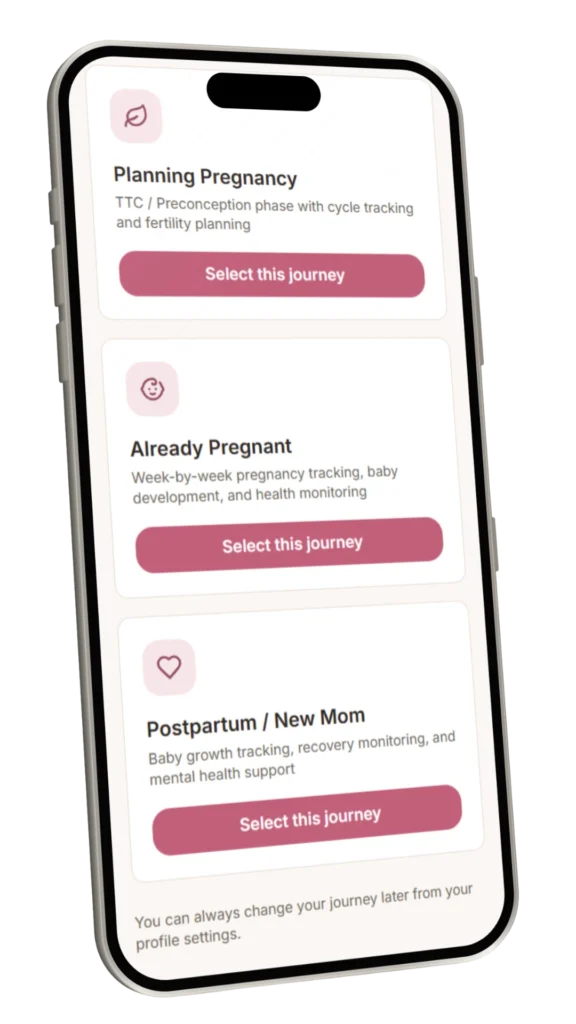
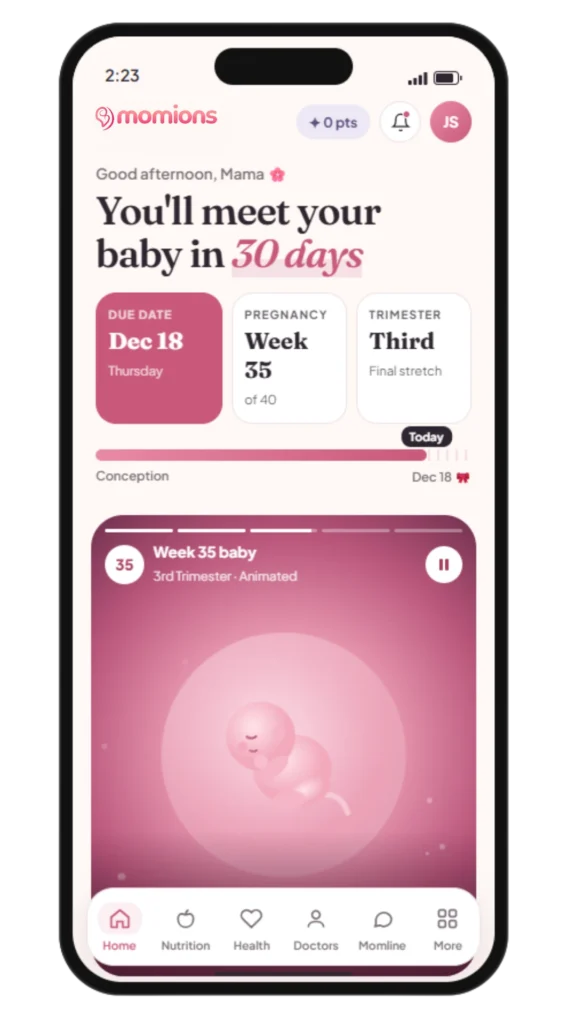
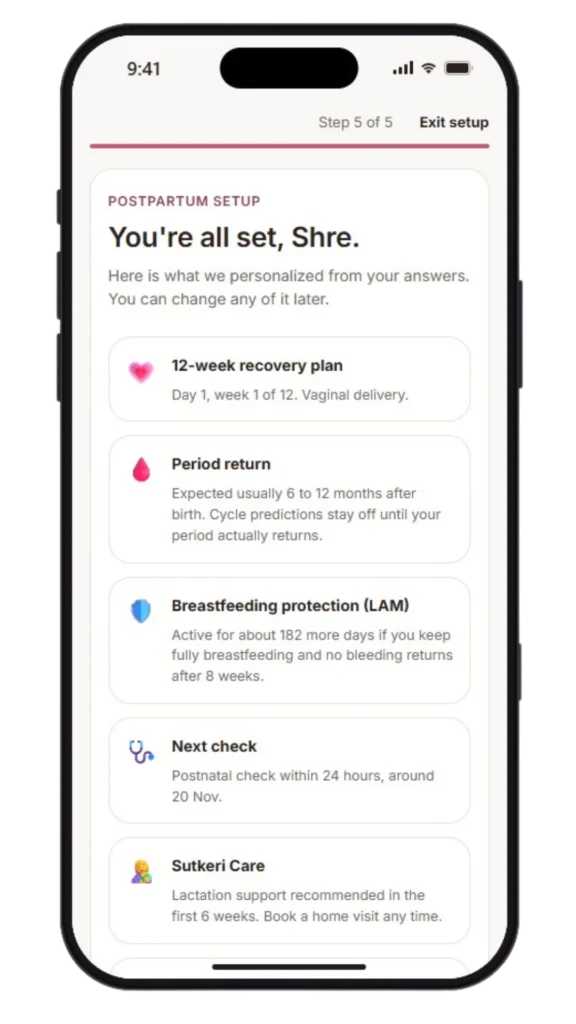
Momions brings the whole journey together — cycle tracking, pregnancy guidance, and the first weeks at home. In Nepali and English, written for Nepal.
Common questions
What happens after birth?
Your body starts to recover straight away. Bleeding (lochia) is normal and slowly gets lighter over 4–6 weeks; cramps and sore breasts are common as your womb shrinks and milk comes in. Try to have a postnatal check within 24 hours of birth and again in the first week — for you and your baby.
General information, not a diagnosis. If something feels wrong, contact a health worker.
When should I start folic acid?
Ideally at least a month before you start trying to conceive, and every day through the first 12 weeks of pregnancy. The usual dose is 400 micrograms (0.4 mg) a day — your doctor or health worker may advise a different dose for you.
General information, not a diagnosis. If something feels wrong, contact a health worker.
Which pregnancy signs need urgent care?
Go to a health facility straight away — don’t wait for your next appointment — if you have bleeding from the vagina, a severe headache or blurred vision, fits or fainting, severe belly pain, a fever, your waters breaking early, or your baby moving less than usual.
General information, not a diagnosis. If something feels wrong, contact a health worker.
Is my low mood after birth normal?
Feeling teary or up-and-down in the first two weeks (“baby blues”) is very common and usually passes. If low mood, worry or not enjoying things lasts longer than two weeks — or you have thoughts of harming yourself or your baby — talk to a health worker. It is treatable, and it is not your fault.
General information, not a diagnosis. If something feels wrong, contact a health worker.
Is sex safe during pregnancy?
For most healthy pregnancies, yes. Your doctor may advise avoiding it if you have bleeding, a low-lying placenta, a history of early labour, or your waters have broken. Comfort matters — change positions as your bump grows.
General information, not a diagnosis. If something feels wrong, contact a health worker.
What should I eat for iron?
Green leafy vegetables (saag), dal, beans, eggs, meat and fish are good sources. Eat them with vitamin C foods such as amla, guava, oranges or lemon to absorb more iron, and keep tea and coffee away from mealtimes.
A woman deserves to understand what is happening in her own body - in her own language, without being made to feel foolish for asking.
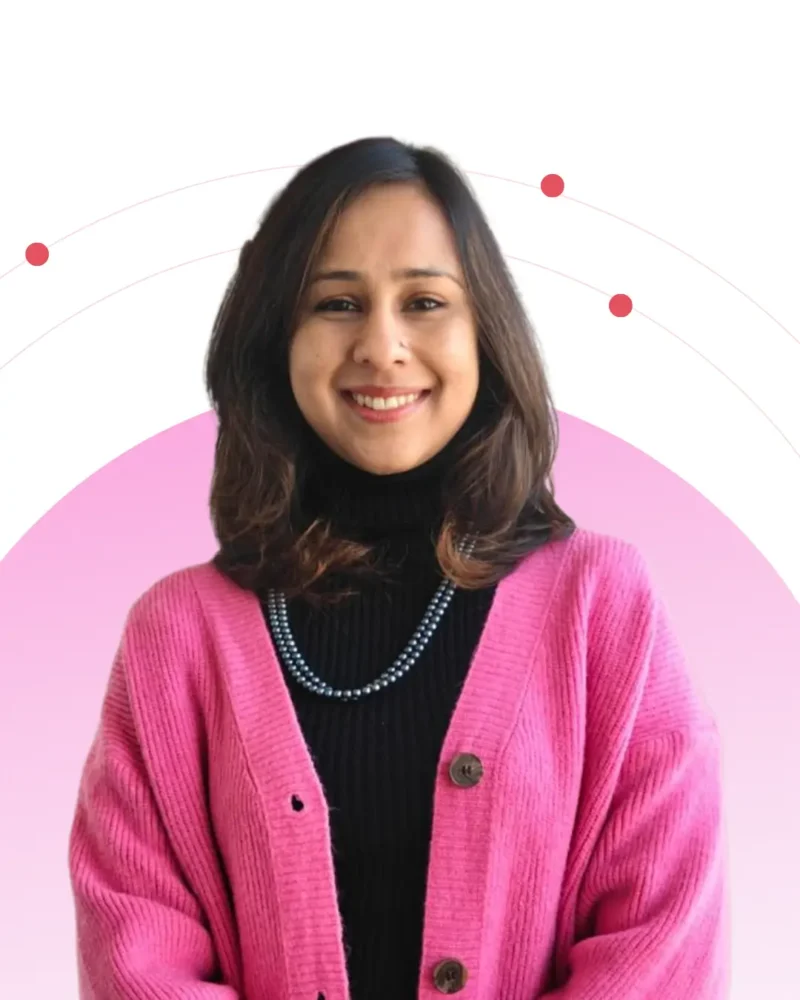
Dr. Shreeyashi AryalAssociate Professor, Obstetrics and Gynecology
Dr. Shreeyashi Aryal plays a pivotal role in shaping the vision and development of our pregnancy planning and care application. Through her medical expertise, valuable insights, and ongoing guidance, she helps us design a platform that addresses the real needs of women throughout their pregnancy journey.
Momions partners with Nepal’s leading maternal and newborn health organisations to bring specialist services directly within the platform — seamlessly connected to your care journey.
Latch, positioning, supply and pain. Certified lactation nurse at your home.
Home visit · Most helpful in the first 2 weeks
Online lactation consultation
Video call for feeding questions, pumping and returning to work.
Online
Sutkeri postnatal nurse visit
Recommended now
Mother and newborn check at home: bleeding, wound or stitches, baby weight, cord and jaundice.
Home visit · Can support your day 3 and day 7 checks
For organisations
Want to be a Momions partner?
If your organisation supports maternal health, newborn care, breastfeeding, nutrition or women’s wellness in Nepal — we’d love to build something meaningful together. Reach the families who need you most.
We’re building Momions because pregnancy and early motherhood come with plenty to keep track of — and plenty of questions.
Our aim is to make your next steps clearer, your care easier to organise and relevant guidance easier to find. With room for you, as well as your baby.
With care, the Momions team
From the Momions journal
Reading that respects your time.
Short, clinician-reviewed articles in Nepali and English.
Straightforward answers — including the ones that are still open.
01What is Momions?
Momions is an app for managing the journey from pregnancy planning through pregnancy and early motherhood in Nepal — cycle tracking, week-by-week guidance, reminders and postpartum support in one place.
02How does pricing work?
Every account starts with a free one-month trial — no card needed. After that, Prepare is NPR 199 a month and Nurture is NPR 399 a month. Pay yearly instead and save up to 17% (NPR 1,988 or NPR 4,088 a year). 13% VAT is added at checkout. You can cancel anytime and keep access until the end of the period you’ve paid for.
03Can I switch from Prepare to Nurture?
Yes. When you find out you’re pregnant, switch to Nurture in the app and Momions carries your history forward — nothing is lost, nothing restarts. You can move between monthly and yearly billing anytime too.
04Will it be available in Nepali?
Nepali and English are planned for the product. Language coverage will be confirmed at launch.
05Is Momions a replacement for my doctor?
No. Momions is intended to support organisation and understanding alongside professional care. It does not provide emergency medical services.
06Who can see my personal information?
Privacy controls and consent-based sharing are product requirements. The final privacy policy will explain data collection, access, retention and deletion before launch.
Meet your Momions.
Be first to know when the app launches. We’ll send you one email when it’s ready — nothing else, ever.