Sex during pregnancy is a topic many Nepali couples wonder about but few feel comfortable asking their doctor. Couples worry. Partners hold back out of fear of harming the baby. Mothers wonder if desire is normal, or feel guilty for not being in the mood. Mothers-in-law give warnings. Nobody seems willing to speak plainly.
Conversations around intimacy during pregnancy are often considered private or uncomfortable in Nepal and South Asia, many couples grow up hearing myths and warnings that create fear and confusion. Some are told that sex can harm the baby, increase the risk of miscarriage, or negatively affect the mother’s health.
And yet, this is one of the most searched and least talked about topics in maternal health across Nepal. At Momions, we believe every couple deserves clear, honest, medically accurate information delivered with the sensitivity this topic deserves.
This guide answers every question honestly, with medical facts and cultural sensitivity
So here it is.
Is Sex During Pregnancy Safe?
Let us start with the most important answer: for most women with healthy, low-risk pregnancies, sex during pregnancy is completely safe for both mother and baby.
In a healthy pregnancy with no complications, sex is safe throughout all three trimesters. The baby is protected by the amniotic sac, the uterine muscles, and the mucus plug that seals the cervix.
This means penetration and orgasm usually does not harm the baby. Many healthcare professionals agree that couples can continue intimacy during pregnancy unless there are specific medical complications or restrictions advised by a doctor.
However, every pregnancy is different. Physical comfort, emotional wellbeing, and medical conditions can all influence what feels safe and comfortable for a couple during pregnancy.
Why Many Couples Feel Afraid of Intimacy During Pregnancy
Many couples become anxious about intimacy after pregnancy because they fear:
- harming the baby
- causing miscarriage
- creating complications
- hurting the mother physically
In Nepal, many people also grow up hearing statements such as:
- “Sex can hurt the baby.”
- “Pregnant women should avoid intimacy.”
- “It may cause miscarriage.”
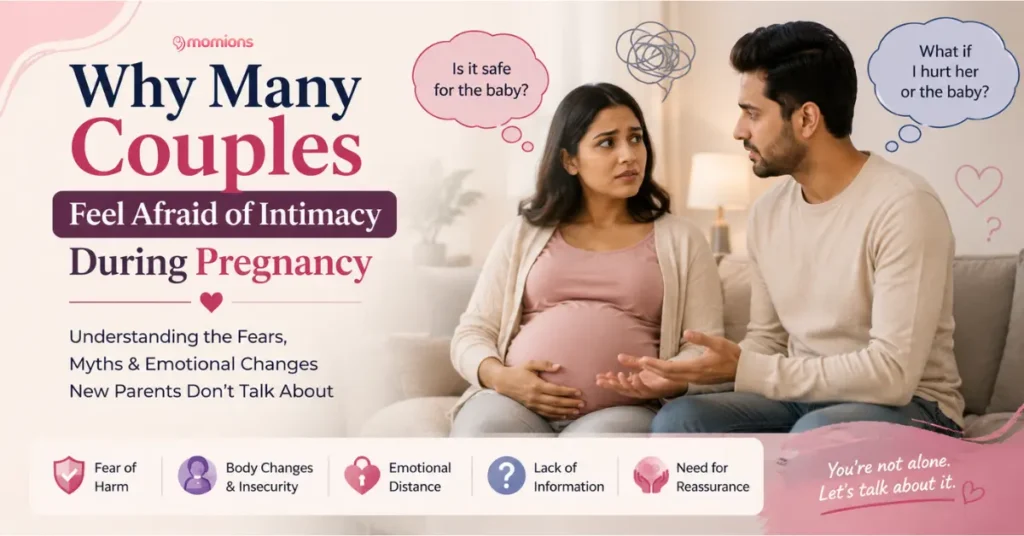
Because open conversations around pregnancy and intimacy are limited, many couples rely on myths rather than medical guidance. This fear can sometimes create emotional distance between partners during an already emotionally sensitive time.
Can Sex During Pregnancy Harm the Baby?
In a healthy pregnancy, the baby is usually not harmed during intercourse. The uterus and amniotic fluid protect the baby well. The baby cannot “see” or “understand” what is happening during intimacy.
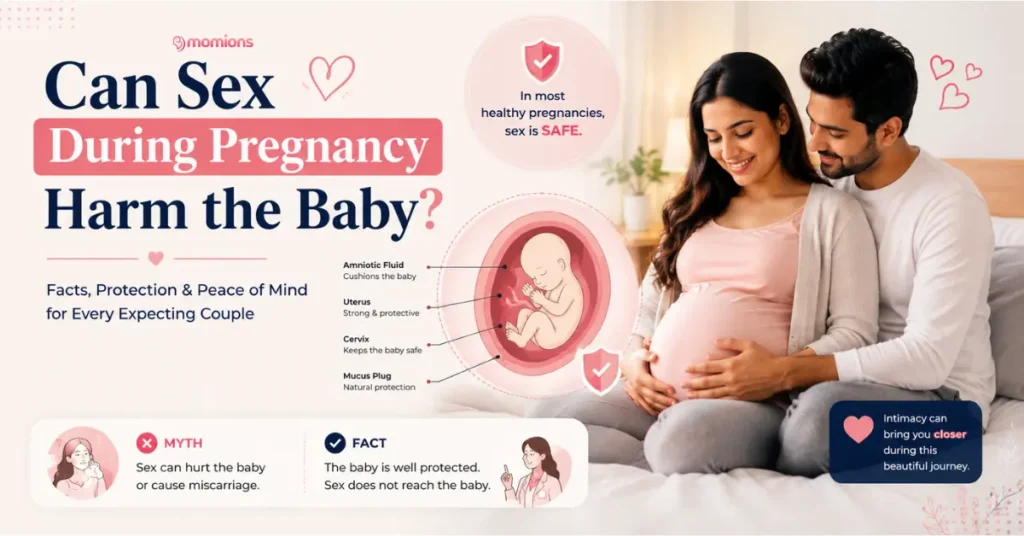
For most couples, intercourse does not directly affect the baby’s safety. However, if there are pregnancy complications, doctors may advise avoiding sex temporarily or completely depending on the condition.
Is It Normal for Sexual Desire to Change During Pregnancy?
Yes, it is completely normal for sexual desire to change during pregnancy. Hormonal changes, nausea, body pain, emotional stress, fatigue, and anxiety can affect intimacy differently for every woman.
Many women experience low desire due to nausea, exhaustion, and tender breasts. Some women may feel physically uncomfortable, lose interest in intimacy temporarily. They feel emotionally overwhelmed and become mentally exhausted.
This is completely normal. Sexual desire can also change from trimester to trimester. There is no “normal” level of desire during pregnancy, and every experience is different.
Light spotting after sex can occur due to increased cervical sensitivity. This is usually harmless but worth mentioning to your doctor. Avoid deep penetration if uncomfortable.
Remember: changes in desire. Both more and less are entirely normal throughout pregnancy. There is no ‘right’ level of desire. Both partners should feel free to express what they need without pressure.
How Is the Baby Protected?
One of the most common fears is that sex will somehow reach or harm the baby. This is not how pregnancy anatomy works. Your baby is protected by multiple layers:
- The amniotic sac: a fluid-filled bag that cushions and insulates the baby from physical impact
- The uterine walls — thick, muscular walls that completely surround the baby
- The mucus plug — a thick plug of mucus that seals the cervix (the opening to the uterus) throughout pregnancy, preventing anything from entering
- The cervix itself — closed and firm throughout a healthy pregnancy until true labour begins
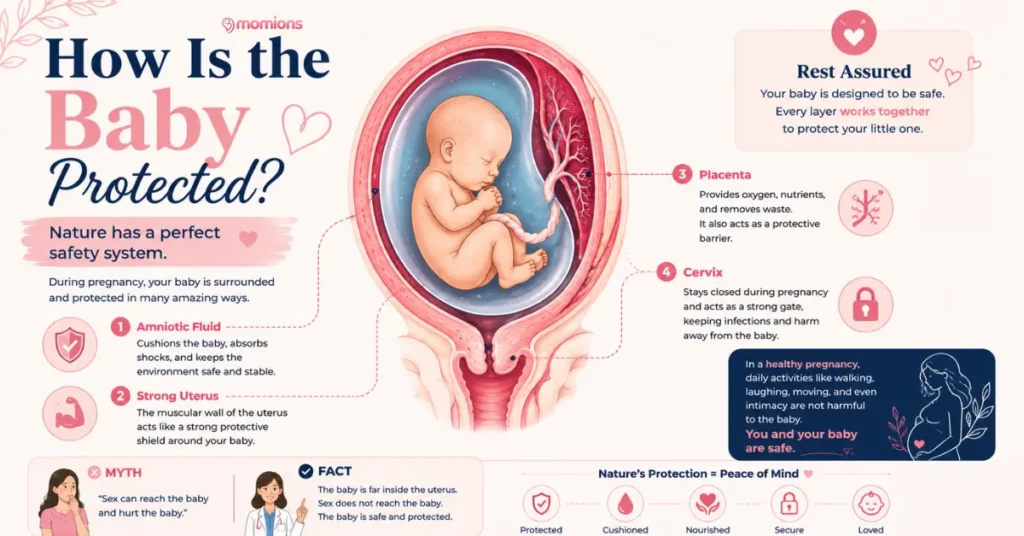
The penis does not enter the uterus during sex. The baby cannot ‘feel’ penetration in any harmful way. Orgasm causes mild uterine contractions. These are normal and do not cause labour in a healthy pregnancy.
Emotional Changes During Pregnancy and Intimacy
Pregnancy affects more than just the body. It also affects emotions, confidence, stress levels, and relationship dynamics.
Some mothers may worry:
- “Will my partner still find me attractive?”
- “Why do I feel emotionally distant?”
- “Why am I not interested in intimacy?”
Some partners may quietly worry:
- “What if I accidentally hurt the baby?”
- “Should we completely avoid intimacy?”
Because of these emotional changes, communication becomes extremely important during pregnancy. Honest conversations without pressure or judgment can help couples feel emotionally safer and more connected.
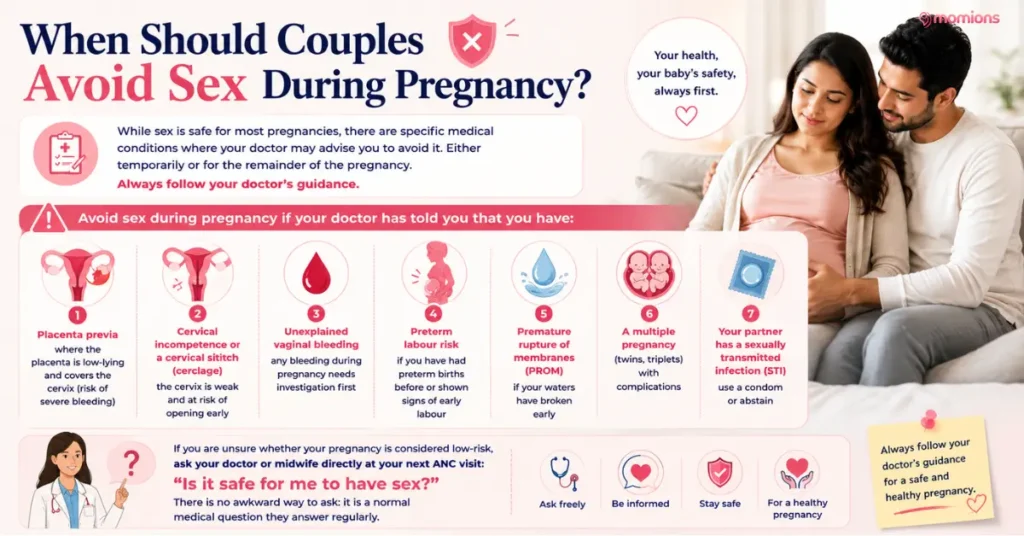
When Should Couples Avoid Sex During Pregnancy?
While sex is safe for most pregnancies, there are specific medical conditions where your doctor may advise you to avoid it. Either temporarily or for the remainder of the pregnancy. Always follow your doctor’s guidance.
Avoid sex during pregnancy if your doctor has told you that you have:
• Placenta previa — where the placenta is low-lying and covers the cervix (risk of severe bleeding
• Cervical incompetence or a cervical stitch (cerclage) — the cervix is weak and at risk of opening early
• Unexplained vaginal bleeding — any bleeding during pregnancy needs investigation first
• Preterm labour risk — if you have had preterm births before or shown signs of early labour
• Premature rupture of membranes (PROM) — if your waters have broken early
• A multiple pregnancy (twins, triplets) with complications
• Your partner has a sexually transmitted infection (STI) — use a condom or abstain
If you are unsure whether your pregnancy is considered low-risk, ask your doctor or midwife directly at your next ANC visit: ‘Is it safe for me to have sex?’ There is no awkward way to ask: it is a normal medical question they answer regularly.
Signs You Should Speak to a Doctor
It is important to speak to a healthcare professional if intimacy causes severe pain, bleeding, strong cramps, fluid leakage, dizziness and unusual discomfort
Ignoring symptoms can sometimes increase complications, so medical guidance should always be taken seriously.
Safe and Comfortable Intimacy During Pregnancy
As pregnancy progresses, physical comfort becomes more important. Couples may need to:
- communicate openly
- move gently and slowly
- prioritize comfort
- avoid pressure
- focus on emotional closeness
Intimacy during pregnancy does not always need to mean intercourse. Emotional support, affection, physical reassurance, and care are also important forms of intimacy.
Why Emotional Support Matters During Pregnancy
Many pregnant women experience emotional vulnerability, stress, and exhaustion during pregnancy. Sometimes what mothers need most is not advice — but understanding.
Supportive partners can help by:
- listening calmly
- reducing pressure
- offering reassurance
- helping with responsibilities
- respecting emotional boundaries
Emotional support during pregnancy can strengthen trust, comfort, and emotional connection between couples.
Common Myths About Sex During Pregnancy
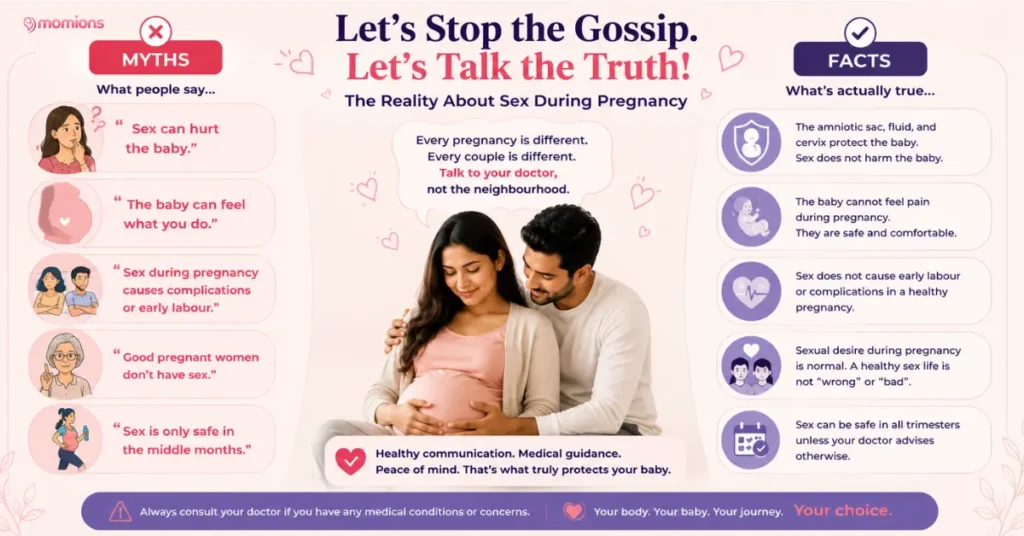
Myth: Sex Causes Miscarriage
In most healthy pregnancies, sex does not cause miscarriage. Most miscarriages happen because of developmental or medical reasons unrelated to intercourse.
Myth: The Baby Gets Hurt During Sex
The baby is protected inside the uterus and is usually not harmed during intercourse.
Pregnant Women Should Completely Avoid Intimacy
Unless medically advised otherwise, many couples can safely continue intimacy during pregnancy.
How Partners Can Be More Supportive During Pregnancy
Pregnancy can feel emotionally overwhelming for many women. Partners who provide emotional reassurance and patience can make a major difference.
Supportive partners should:
- avoid pressure
- communicate openly
- understand emotional changes
- respect comfort levels
- provide reassurance and care
Pregnancy is not only a physical journey. It is also an emotional one.
Pregnancy Intimacy Looks Different for Every Couple
Some couples remain physically intimate throughout pregnancy, while others become more emotionally connected than physically connected. Some couples need more reassurance, patience, and communication during this time.
There is no “perfect” way to experience intimacy during pregnancy. Every couple’s journey is different.
When to Seek Professional Advice
Couples should speak to healthcare professionals if they:
- feel anxious about intimacy
- are unsure about safety
- experience discomfort
- have pregnancy complications
- feel emotionally disconnected
Asking questions during pregnancy is healthy and important.
Final Thoughts
So, is it safe to have sex during pregnancy? For most healthy pregnancies, yes. It is generally safe. But comfort, emotional wellbeing, communication, and medical guidance should always come first.
Pregnancy changes relationships, emotions, and physical experiences in many ways. Couples deserve honest information instead of fear, shame, or myths. Intimacy during pregnancy should be guided by trust, care, emotional understanding, and mutual comfort.
A note for partners:
Your partner’s body is doing something extraordinary. Her comfort, her rest, and her emotional wellbeing come first. Follow her lead. Never pressure her. Ask what she needs. Sometimes that is closeness without sex, and that is enough. Being present, patient, and supportive is one of the most important things you can do during this time.”
Frequently Asked Questions
Can sex during pregnancy hurt the baby?
In most healthy pregnancies, the baby is protected and usually not harmed during intercourse.
Can sex cause miscarriage?
Generally no. Most miscarriages are unrelated to intercourse.
Is low sexual desire during pregnancy normal?
Yes. Hormonal, emotional, and physical changes can affect desire differently for every woman.
When should couples avoid sex during pregnancy?
If a doctor advises against it because of complications such as bleeding, placenta previa, or risk of preterm labor.
Is emotional closeness important during pregnancy?
Yes. Emotional support and communication are extremely important during pregnancy and can help couples feel more connected and supported.