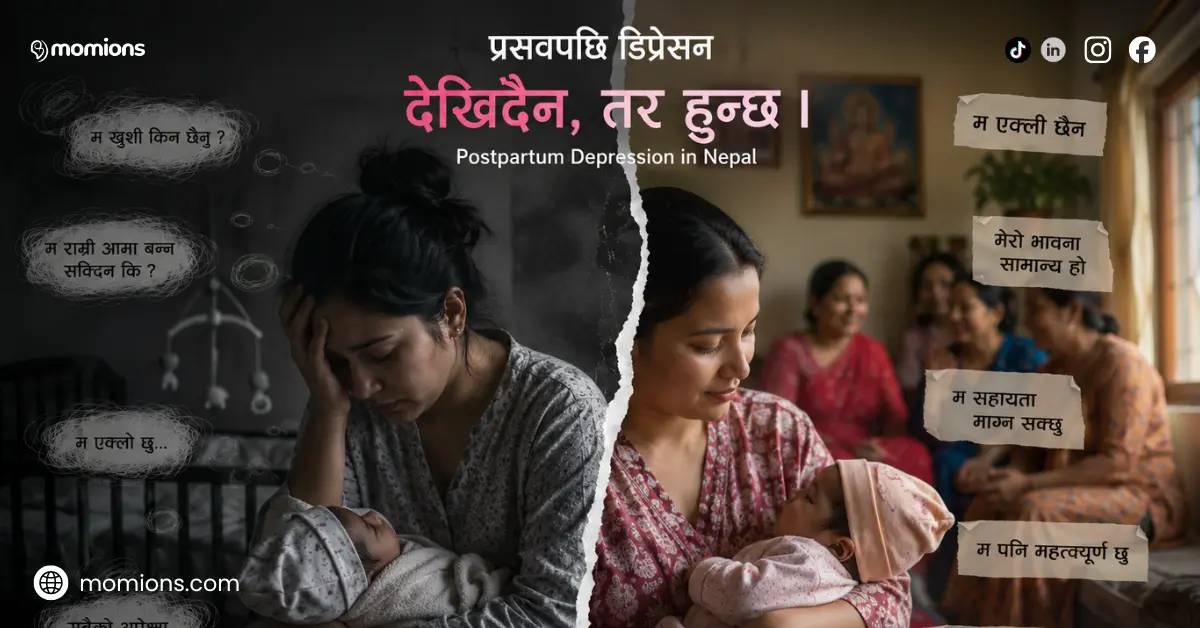
Becoming a mother is often described as one of the happiest moments in a woman’s life. In Nepal, childbirth is celebrated with love, family gatherings, blessings, and traditions. But behind the smiles and celebrations, many new mothers silently struggle with emotions they do not fully understand.
Some feel constantly overwhelmed. Some cry without knowing why. Some feel emotionally disconnected from their baby, their partner, or even themselves.
And very often, Nepali families mistake these signs for:
- “normal weakness”
- “hormonal mood”
- “new mother stress”
- “lack of adjustment”
- or simply “overthinking”
But sometimes, these are signs of Postpartum Depression (PPD).
Postpartum depression is real, serious, and more common than many people realize.
What Is Postpartum Depression?

Postpartum Depression is a mental health condition that can happen after childbirth. It affects a mother emotionally, mentally, and physically.
It is different from the temporary “baby blues” many mothers experience during the first few days after delivery.
Baby blues usually improve within 1–2 weeks.
But postpartum depression can last for months if left unnoticed and untreated.
A mother with postpartum depression is not “weak” or “ungrateful.” She is dealing with emotional and psychological changes that deserve support and care.
Why Postpartum Depression Often Goes Unnoticed in Nepali Families
In many Nepali households, motherhood is expected to come naturally.
New mothers are often expected to:
- instantly feel joyful
- manage household responsibilities
- care for the baby without complaint
- adjust emotionally very quickly
Because of this expectation, many mothers hide what they are truly feeling.
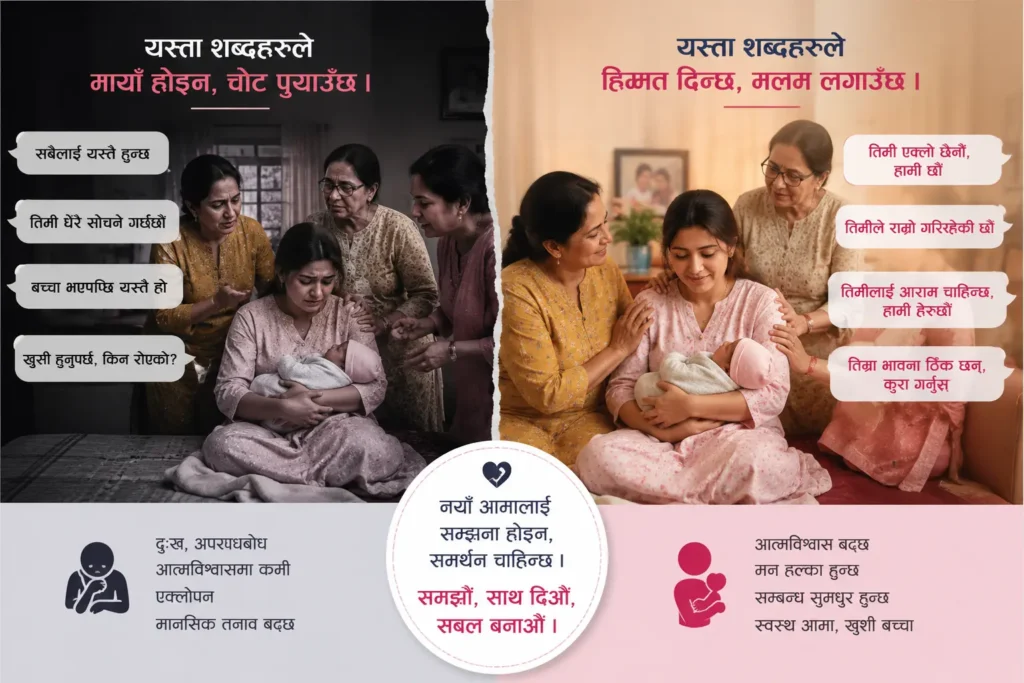
Family members may unintentionally dismiss emotional struggles by saying things like:
- “सबैलाई यस्तै हुन्छ”
- “तिमी धेरै सोच्ने गर्छौ”
- “बच्चा भएपछि यस्तै हो”
- “खुसी हुनुपर्छ, किन रोएको?”
These responses can make mothers feel even more isolated.
Signs of Postpartum Depression Nepali Families Often Ignore
1. Constant Crying or Emotional Breakdown
Many mothers cry frequently after childbirth, sometimes without understanding why.
Family members may assume:
“She is just emotional after delivery.”
But if crying becomes frequent, intense, or emotionally draining, it may be more than temporary stress.
A mother may feel:
- emotionally numb
- hopeless
- deeply exhausted
- unable to explain her feelings
2. Feeling Emotionally Disconnected From the Baby
One of the most misunderstood signs of postpartum depression is emotional disconnection.
Some mothers struggle to immediately feel bonded with their baby.
This can create intense guilt because society expects instant maternal attachment.
A mother may think:
- “Why don’t I feel happy?”
- “Am I a bad mother?”
- “Why does this feel so difficult?”
These thoughts are more common than people realize.
3. Extreme Irritability or Anger
Postpartum depression does not always look like sadness.
Sometimes it appears as:
- frustration
- anger
- irritability
- emotional outbursts
A mother may become angry over small things because she is mentally exhausted and emotionally overwhelmed.
Families may label her as:
- rude
- impatient
- difficult
without recognizing the emotional struggle underneath.
4. Withdrawing From Family and Social Interaction
In Nepali culture, family support after childbirth is common. But even when surrounded by people, mothers can still feel deeply lonely.
A mother experiencing postpartum depression may:
- avoid conversations
- isolate herself
- stop responding emotionally
- lose interest in daily activities
This is not always “attitude” or “moodiness.”
Sometimes it is emotional exhaustion.
5. Difficulty Sleeping Even When the Baby Sleeps
Sleep deprivation is normal after childbirth.
But postpartum depression can make sleep problems much worse.
Some mothers:
- stay awake worrying constantly
- feel anxious at night
- overthink everything
- feel emotionally restless even when exhausted
This ongoing mental pressure can slowly worsen emotional health.
6. Feeling Like a Failure as a Mother
Many mothers silently feel they are “not good enough.”
They may compare themselves to:
- other mothers
- social media content
- family expectations
- cultural pressure
This can lead to deep self-criticism.
A mother may constantly feel:
- guilty
- inadequate
- ashamed
- emotionally defeated
Even when she is doing her best.
7. Loss of Interest in Things They Once Enjoyed
Some mothers stop caring about:
- hobbies
- conversations
- self-care
- relationships
- daily routines
Families may think:
“Now she only focuses on the baby.”
But emotional withdrawal can also be a warning sign of depression.
8. Increased Anxiety About the Baby
Postpartum depression and anxiety often happen together.
A mother may:
- constantly fear something bad will happen
- panic easily
- repeatedly check on the baby
- feel unable to relax
This level of anxiety can become emotionally exhausting.
9. Feeling Lonely Even With Support Around
This is one of the most painful parts of postpartum depression.
A mother may have:
- family nearby
- visitors
- support at home
and still feel emotionally alone.
Because emotional support is different from physical presence.
Sometimes mothers need:
- understanding
- reassurance
- emotional safety
- someone who listens without judgment
Why Emotional Support Matters After Childbirth
In many families, most attention goes to:
- the baby’s health
- feeding schedules
- recovery routines
- family celebrations
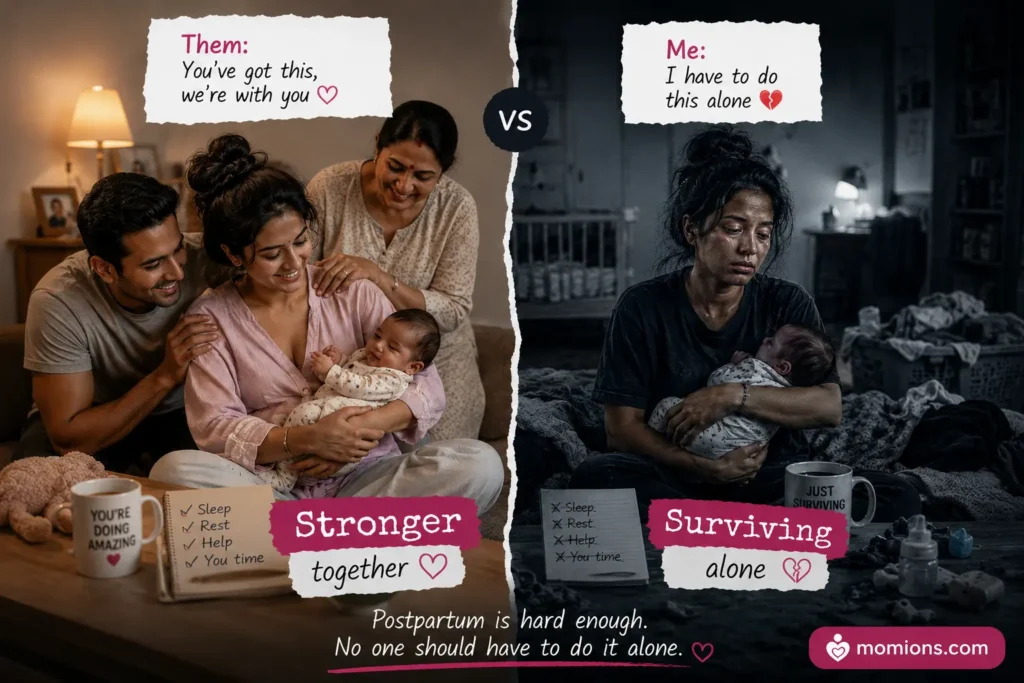
But the mother’s emotional wellbeing is equally important.
A healthy motherhood journey includes:
- emotional care
- mental health support
- rest
- understanding
- partner involvement
- compassionate communication
How Partners and Families Can Help
Listen Without Judging
Sometimes mothers do not need solutions immediately.
They need someone who listens calmly and without criticism.
Avoid saying:
- “You are overreacting.”
- “Others handle this better.”
- “You should be happy.”
Instead say:
- “I’m here for you.”
- “You don’t have to go through this alone.”
- “Your feelings matter.”
Encourage Rest and Recovery
New mothers are often expected to “bounce back” too quickly.
Allowing proper rest and emotional recovery is important.
Small acts of support matter:
- helping with the baby
- reducing pressure
- encouraging sleep
- sharing responsibilities
Normalize Conversations Around Mental Health
Many mothers suffer silently because they fear being judged.
Open conversations around postpartum mental health can help mothers feel safer asking for help.
When to Seek Professional Help
If symptoms continue for more than two weeks or begin affecting daily life, professional support is important.
Seek help if a mother experiences:
- constant sadness
- severe anxiety
- emotional numbness
- hopelessness
- inability to function normally
- thoughts of harming herself
Postpartum depression is treatable, and early support can make a huge difference.
Motherhood Does Not Have to Be Suffered Silently
Not every mother feels joyful all the time after childbirth.
And that does not make her a bad mother.
Postpartum depression is not a failure of motherhood.
It is a human emotional experience that deserves compassion, understanding, and support.
In Nepal, many mothers carry emotional pain silently because nobody notices the signs early enough.
Sometimes, the most powerful thing a family can do is simply ask:
“How are you feeling — really?”
Because mothers need care too.
Frequently Asked Questions About Postpartum Depression
Is postpartum depression common in Nepal?
Yes. Many mothers in Nepal experience postpartum emotional struggles, but awareness and open discussion are still limited.
Can postpartum depression go away on its own?
Some symptoms may improve with time and support, but persistent depression should not be ignored.
How long can postpartum depression last?
It can last for weeks or months if untreated. Early emotional and professional support helps recovery.
Can partners help with postpartum depression?
Absolutely. Emotional support, listening, reassurance, and shared responsibilities can make a major difference.
Is it normal to feel emotionally disconnected after childbirth?
Yes, some mothers experience emotional disconnection or delayed bonding. This can happen with postpartum depression and deserves support, not judgment.