If you search “best gynecologist in Kathmandu,” you will find plenty of lists. What you will not find is a clear answer to the question that actually matters: how do I know which gynecologist is right for me?
A name list cannot tell you whether a doctor listens, whether the wait is reasonable, or whether they are registered to practise in Nepal. Choosing a gynecologist is not about finding the most famous name. It is about finding the right fit for your body, your concern, and your stage of life.
This guide walks you through what to check, what to ask, and what to ignore, so you can make an informed choice rather than a rushed one.
Why the “best gynecologist doctor” list is not enough
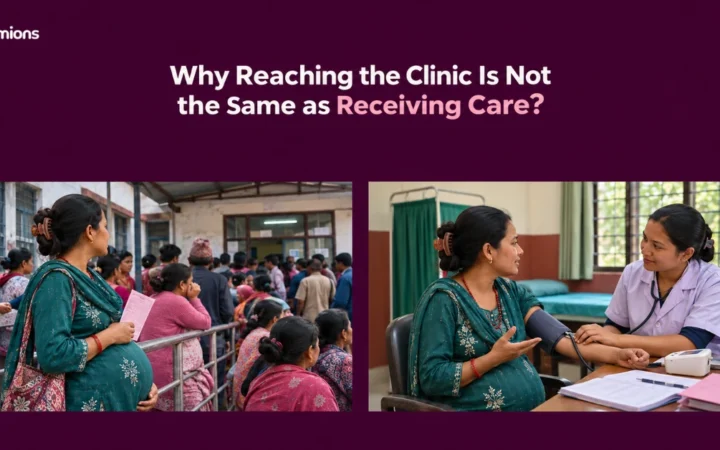
Gynecology is not a one-size-fits-all specialty. The doctor who is excellent for high-risk pregnancy may not be the right person for PCOS or fertility concerns. A senior consultant at a large teaching hospital may have deep expertise, but a long OPD queue can leave you with a five-minute consultation after a four-hour wait.
The “best” gynecologist for you depends on three things: your specific concern, the doctor’s verified credentials, and whether the consultation feels safe and unhurried.
1. Verify credentials before anything else
Every doctor practising in Nepal must be registered with the Nepal Medical Council (NMC). A gynecologist should hold an MBBS with an MD or MS in Obstetrics & Gynecology, and their NMC registration should be current.
You can check this yourself on the NMC website by searching the doctor’s name or registration number. It takes two minutes and is the single most reliable way to confirm that a doctor is qualified to practise.
What to check:
- MBBS and MD/MS in Obstetrics & Gynecology
- Active NMC registration
- Hospital affiliation (teaching hospitals and multispecialty hospitals generally have more support services)
2. Match the doctor to your specific concern
“Gynecologist” is a broad term. The doctor you need depends on why you are going.
Pregnancy care
Look for a doctor who handles routine antenatal care and, if needed, high-risk pregnancy.
Irregular periods, PCOS, or hormonal concerns
Look for someone who manages menstrual disorders regularly, not just pregnancy.
Fertility concerns:
A doctor with specific training or fellowship in reproductive medicine may be more appropriate.
General screening (Pap smear, pelvic exam)
A comfortable, private consultation setting matters more than subspecialty here.
A doctor who is excellent at one of these is not automatically excellent at all of them. Ask what proportion of their practice is spent on your concern.
3. Look for continuity of care
Pregnancy and ongoing gynecological conditions are not one-visit problems. Ideally, the same doctor should manage your care from start to finish, through your trimesters or through the full course of treatment for a condition like PCOS or fibroids.
Before booking, ask: Will I see the same doctor at every visit, or will I be rotated through whoever is on duty? Continuity builds trust and prevents important details from falling through the cracks.
4. Check the practical experience: wait time and consultation length
A rushed five-minute consultation after a long wait does not serve anyone well, especially for a first visit or a sensitive concern. In Kathmandu, OPD wait times vary widely. Some clinics offer 20 to 30 minute consultations with appointments, while some large hospital OPDs have reported waits of two hours or more for a brief consultation.
Practical questions to ask when booking:
- How long is a standard first consultation?
- Is the doctor running on schedule, or should I expect a long wait?
- Can I book a specific time slot rather than joining a walk-in queue?
A doctor who gives you time to explain your symptoms is not a luxury. It is a basic requirement for good care.
5. Ask about the consultation setting and privacy
Gynecological consultations involve sensitive conversations and examinations. The setting should feel private and unhurried.
Look for a clinic or hospital where the consultation room is separate from the waiting area, and where you are not rushed through the door. If you are visiting for the first time or discussing something personal, this matters more than the doctor’s title.
6. Know what to ask at your first visit
A good gynecologist will welcome questions. If you feel rushed or dismissed, that is information in itself.
Bring these questions to your first appointment:
- Based on my symptoms, what are the possible causes?
- What tests are you recommending, and why?
- What are the treatment options, and what happens if we wait?
- How many visits will this likely take?
- What should I do if my symptoms get worse before the next appointment?
If you have previous reports, ultrasound scans, or a list of current medications, bring them. It saves time and helps the doctor see the full picture.
Meet Dr. Shreeyashi Aryal, Medical Advisor at Momions
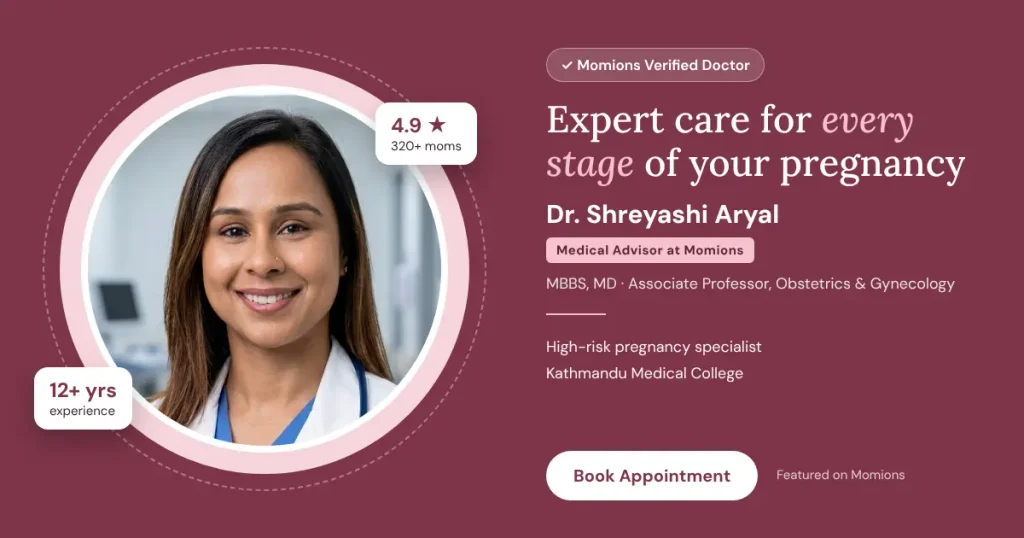
Dr. Shreeyashi Aryal is a Professor of Obstetrics and Gynecology at Kathmandu Medical College (KMC) Teaching Hospital. She is an MD in Obstetrics & Gynecology and has spent years in clinical practice, teaching, and surgical care.
At Momions, Dr. Aryal serves as a medical advisor, helping ensure that the health information families receive is accurate, evidence-based, and grounded in the realities of care in Nepal. Her role is not to be “the best doctor” on a list, it is to bring clinical rigour to the guidance Momions provides, so that families can make informed decisions about their health.
If you are choosing a gynecologist in Kathmandu, Dr. Aryal’s profile is a useful reference point for what to look for: verified credentials, a teaching-hospital background, and a focus on obstetrics and gynecology as a long-term clinical practice, not just a name on a directory.
Red flags to watch for
- The doctor is not registered with the Nepal Medical Council, or cannot provide a registration number.
- The consultation is rushed and you are not given time to ask questions.
- You are pushed toward a procedure or surgery without a clear explanation of alternatives.
- The clinic cannot tell you who will be managing your care across multiple visits.
- You feel dismissed or judged when describing your symptoms.
The bottom line
The best gynecologist in Kathmandu is not the one with the biggest advertisement. It is the one whose credentials you can verify, whose experience matches your concern, and whose consultation gives you the time and privacy you need.
Use this guide as a checklist. Ask the questions. Check the NMC registration. And if a consultation does not feel right, it is okay to seek a second opinion.
Your health deserves a doctor who treats you as a person, not a name on a list.